

Why Young India Is Returning to Its Own Symbols

For most of the last forty years, looking modern in India meant looking Western. Aspiration pointed outward, and Indian reference in clothing was largely confined to occasion wear.
That equation is breaking among people under thirty-five, and the reasons are more interesting than nationalism.

What Changed
Access stopped being scarce, so signalling access to foreign brands stopped signalling much
A generation grew up without the comparison to scarcity their parents had
Digital platforms removed the gatekeeping that made local design invisible
Indian design talent became visible at a scale it previously was not
Global aesthetics became so homogenous that distinctiveness moved elsewhere
Notice that none of these are about pride. They are about the older signal losing its value, which left a gap.
What Filled the Gap
Reference that carries meaning independently of a brand's standing. A symbol from a living tradition does not depreciate when a label has a bad quarter.
That structural difference is the subject of why young India is moving past logos.
The Difference From Earlier Revivals
India has had heritage revivals before. What is different now is who they are for.
Earlier waves were often translation work, explaining Indian culture to an international audience or to an elite domestic one. The current one mostly is not. It is made for people who already share the references, which means it can be subtler.
You do not have to explain Vanvaas to someone who grew up with the word. That changes what a design has to do.
Where It Goes Wrong
Symbols used because they read as Indian rather than because they mean something
Sanskrit that does not spell a word, which readers notice immediately
Sacred imagery placed without thought about where it sits on the body
Heritage as a marketing layer over an unremarkable garment, which is the test in what Indian symbols on t-shirts actually mean
Treating one's own tradition as exotic, which reproduces the outside gaze from inside
What This Is Not
It is not a rejection of global influence, and anyone framing it that way is selling something. The same people wearing Indian reference also wear sneakers, listen to global music and work in global industries.
It is narrower: a generation deciding that the interesting material was closer to hand than they were told.
What we publish about our own tees: 100% cotton, 240 GSM (220 GSM on WARLI), screen printed, relaxed unisex fit, XS(40) to XL(48), Rs 1,349. We do not publish factory information or hold environmental certification, and we will not imply otherwise.
Frequently Asked Questions
Why is Indian-inspired fashion growing among young people?
Signalling access to foreign brands lost value as access stopped being scarce, and reference with independent meaning filled the gap. Digital platforms also made local design visible.
Is this a rejection of Western fashion?
No. The same buyers wear global silhouettes and brands. The shift is that Indian reference stopped being confined to occasion wear.
How is this different from earlier heritage revivals?
Earlier waves largely explained Indian culture to outside or elite audiences. The current one is made for people who already share the references, which allows subtler design.
What makes heritage-inspired design fail?
Symbols chosen because they look Indian rather than because they mean something, incorrect Sanskrit, careless placement of sacred imagery, and heritage used as a layer over an ordinary garment.
Discover how silence can speak through design. Explore our latest streetwear collections where ancient wisdom meets modern minimalism. Each piece embodies mindful fashion, Indian inspired streetwear, and the spirit of Shunya Theory.
👉 ARKA spiritual streetwear inspired by the Sun's energy
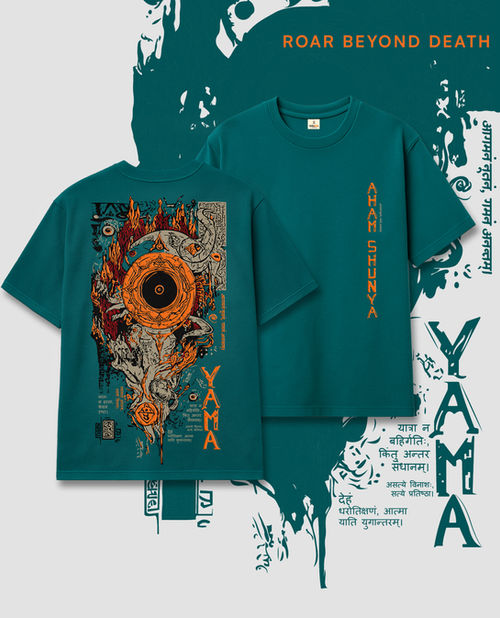
👉 YAMA fearless minimalism rooted in ancient philosophy
👉 VANVAAS self-discovery through solitude and design
👉 WARLI Indian heritage streetwear with tribal art essence




Comments