

Thrifting and Secondhand Clothing in India: What Actually Works

Buying secondhand is the lowest-impact way to add clothing to a wardrobe, because the garment already exists and its production footprint is already spent. In India the market has grown quickly, mostly through Instagram and resale apps.
It also has real limitations that rarely get discussed, so both are worth covering.

Where People Actually Buy
Instagram thrift accounts, usually curated and sold in drops
Resale and marketplace apps, wider selection with more variable quality
Local secondhand markets, which exist in most major Indian cities
Exchange and swap events, increasingly common in metro cities
Handing down within family and friends, the oldest and still most common route
Judging a Garment You Cannot Return
This is the core skill, because most secondhand sales are final.
Ask for measurements rather than relying on the size label
Request close-ups of underarms, collar and hem, where wear concentrates
Look for pilling, which indicates the fabric is already past its best
Check whether the collar has lost its recovery, since that does not come back
Ask directly about odour, stains and repairs, and note whether the answer is specific
Knowing what good construction looks like helps enormously, and it is set out in how to spot a premium t-shirt.
What Ages Well and What Does Not
Heavier cotton holds up considerably better than lightweight knit
Screen prints survive secondhand life; vinyl transfers usually arrive already cracking
Denim and canvas are among the most reliable secondhand buys
Anything with elastane loses its recovery and rarely returns
Collars and cuffs show age first, so inspect them before anything else
The Honest Limits
Secondhand is not a complete answer, and pretending otherwise does not help anyone. Sizing is unpredictable and returns usually do not exist. Curated thrift can be priced close to new. Some imported secondhand stock arrives through bulk channels of variable provenance. And it is time-consuming in a way that does not suit everyone.
It works best as part of a wardrobe rather than the whole of one.
Where New Still Makes Sense
For pieces you will wear constantly, where fit has to be right and the garment needs to survive years of rotation, buying new with known specifications is often more practical.
For reference, what we publish about our own tees is this: 100% cotton, 240 GSM (220 GSM on WARLI), screen printed, relaxed unisex fit, XS(40) to XL(48), Rs 1,349. We do not publish factory information or hold environmental certification, and we will not imply otherwise.
The reasoning for fewer, better pieces is in the case for owning fewer, better pieces.
Frequently Asked Questions
Is thrifting popular in India?
It has grown quickly, particularly through Instagram thrift accounts and resale apps, alongside long-standing local secondhand markets in most major cities.
How do I check secondhand clothing quality online?
Ask for measurements rather than trusting the size label, request close-ups of underarms, collar and hem, and ask directly about pilling, odour, stains and repairs.
What clothing does not work well secondhand?
Anything with elastane, which loses recovery permanently, lightweight knits that are already thin, and garments with vinyl transfer prints, which crack early.
Is secondhand always more sustainable?
Buying an existing garment avoids new production, which is a genuine benefit. It is not a complete answer given unpredictable sizing, absent returns and variable provenance in some imported stock.
Discover how silence can speak through design. Explore our latest streetwear collections where ancient wisdom meets modern minimalism. Each piece embodies mindful fashion, Indian inspired streetwear, and the spirit of Shunya Theory.
👉 ARKA spiritual streetwear inspired by the Sun's energy
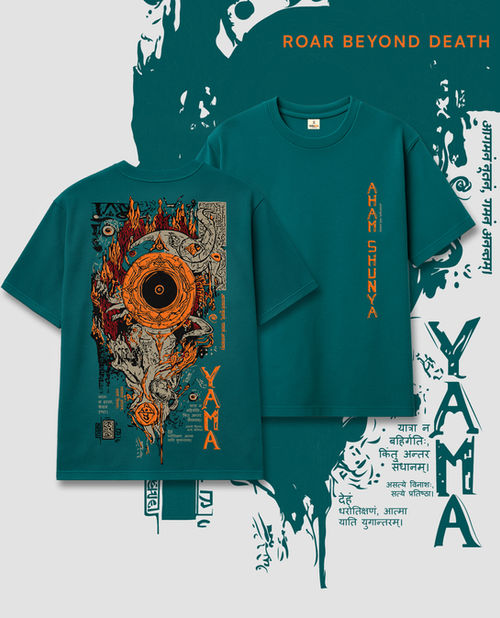
👉 YAMA fearless minimalism rooted in ancient philosophy
👉 VANVAAS self-discovery through solitude and design
👉 WARLI Indian heritage streetwear with tribal art essence




.png)


Comments